

Guardhouse (Île Grande)
Pleumeur-Bodou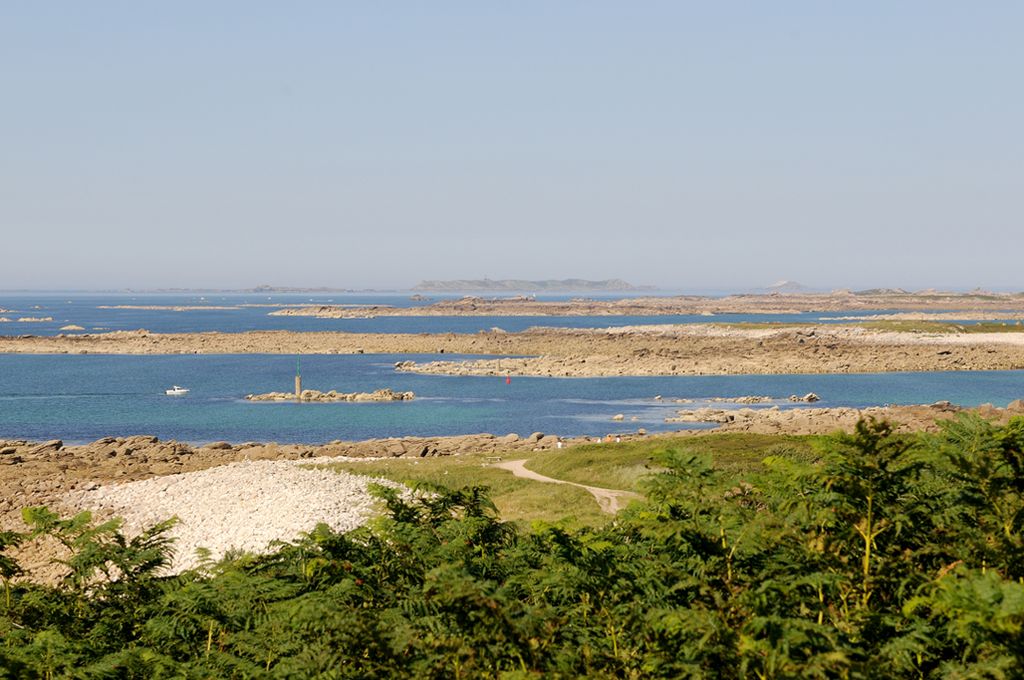
About
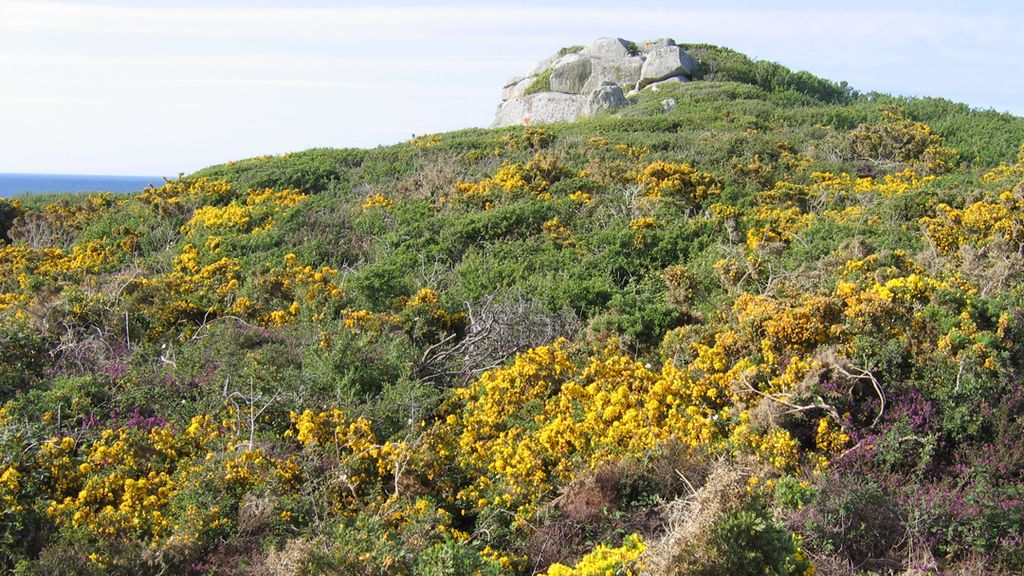
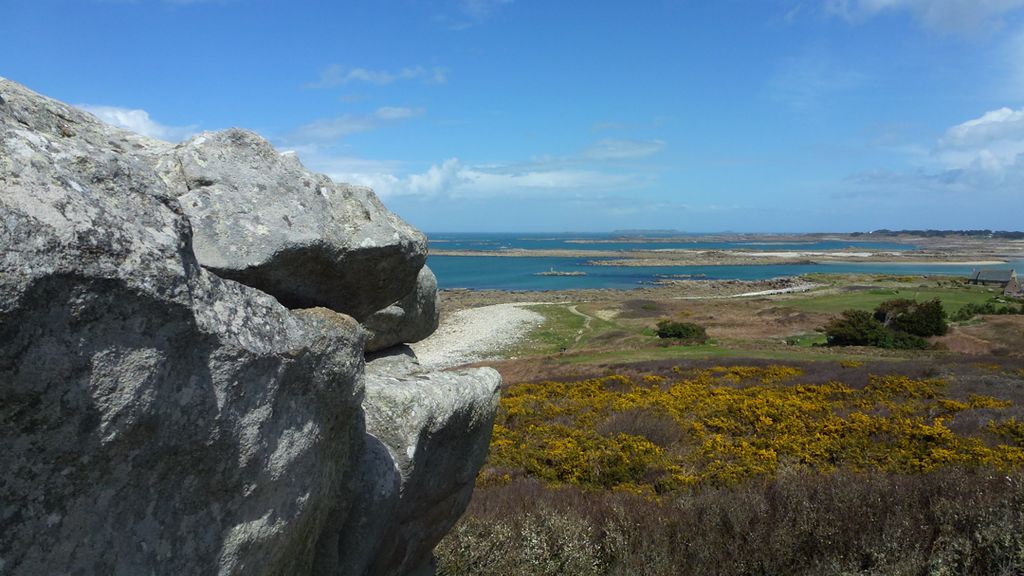
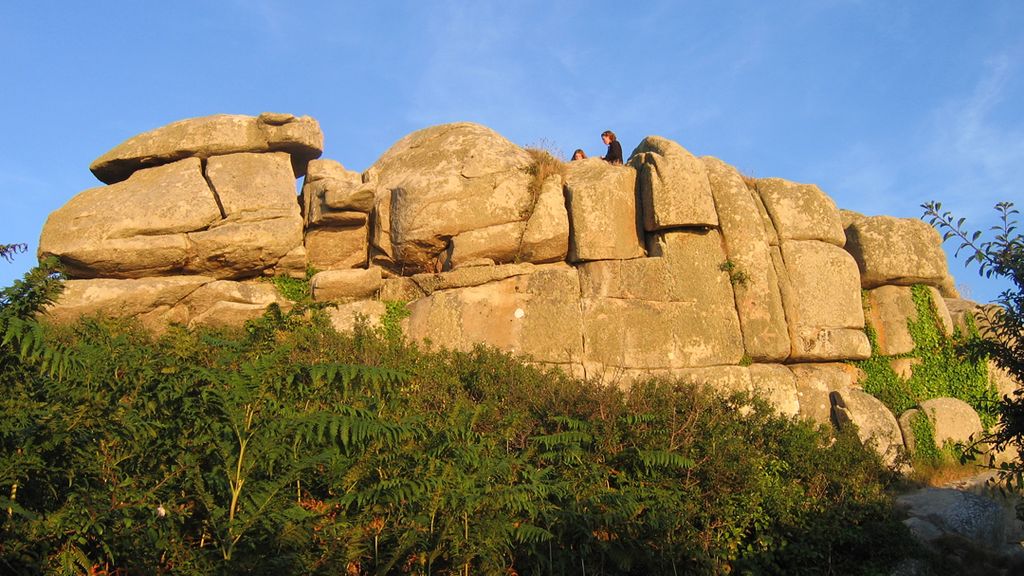
The guardhouse, TyGward in Breton, is an imposing block of granite which stands at the highest point of Île Grande. Right around the periphery of the island, grey and blue granite was mined for several centuries, contributing to the area's renown. Walking around the area, you can find traces of the mining activity and imagine the work of the quarrymen. Following the paths which snake through the heather, you will arrive at a rock formation nicknamed "Le Lion" (the Lion), not far from the statue of a stonecutter. The granite for the construction of the viaduct at Morlaix was extracted from the adjacent old quarry, whose face is impressively large. Opposite you is the outline of Île du Corbeau. This island was an important site for the extraction of blue granite.


The marina (Trozoul)
Trébeurden
Several hundreds of millions of years old, granite is timeless. Even now, its high quality makes it a material of choice for many uses. The marine bears testament to this: its wall was built from...  See
See
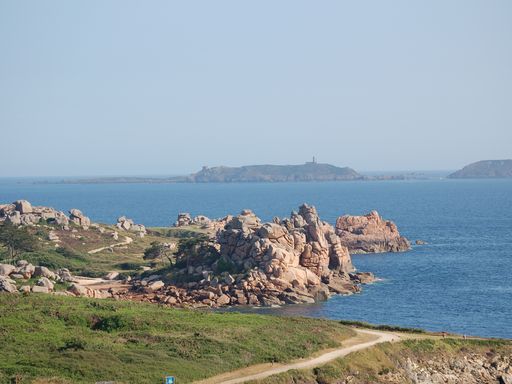

Turquet de Beauregard viewpoint
Perros-Guirec
If you visit this spot at low tide, you will be able to see two types of rocks juxtaposed. The gneiss of Trébeurden is the older rock as it goes back more than two billion years. It is recognisable... See
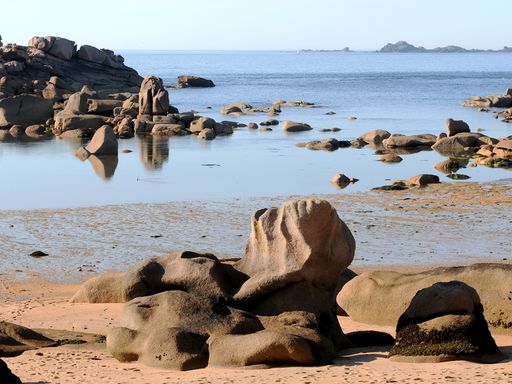
Île Renote
Trégastel
Formerly an island, Île Renote was joined to the mainland in 1895 by construction of a road, forming a peninsula. It has an exceptional geological and human history. Inhabited for 5,000 years, it... See
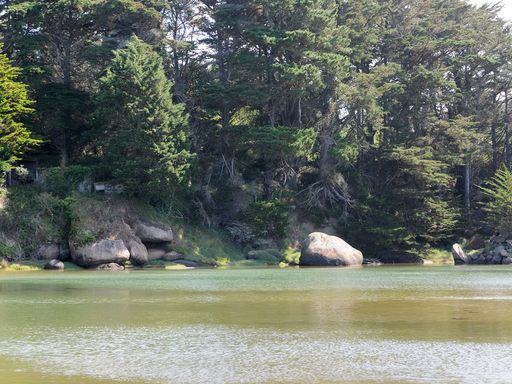

Traouïero Valley
Perros-Guirec / Trégastel
Exploring the magical countryside of the Traouïero Valley is one part of the trail not to be missed. A small stream runs through this deep, wooded valley, which is flecked with blocks of pink... See